




Smart‑Grid Micro‑meteorology Online‑monitoring System Solution
Smart‑Grid Micro‑meteorology Online‑monitoring System Solution
I. Project Background
1.1 Project Background

Against the development trend of power‑industry informatization, it is necessary to collect and transmit real‑time operating‑parameter data of power‑grid equipment. Among various environmental parameters affecting power‑grid operation, micro‑meteorological data exerts significant influence on the normal operation of power‑grid facilities. Since micro‑meteorological conditions cover limited local areas, real‑time monitoring data cannot be readily obtained from meteorological authorities. Therefore, collection and analysis of micro‑meteorological information are of great significance for power‑grid safety and operation. In response to this demand, our company has developed this smart‑grid micro‑meteorology monitoring solution.
1.2 Solution Overview
The micro‑meteorology online‑monitoring system consists of micro‑meteorological sensor, intelligent meteorological host, solar power‑supply system, electric‑control cabinet and meteorological‑monitoring platform. Wired RS485 communication is supported. Power‑supply options include mains‑electricity power supply or solar power‑supply, and a standard 3.0 m meteorological pole with cross‑arm and supporting plates can be deployed.
Based on modular configurable micro‑meteorological sensors, the system monitors meteorological parameters including ambient temperature, humidity, wind speed, wind direction, atmospheric pressure and optical rainfall. Additional measuring elements can be customized according to user requirements. Collected meteorological parameters and their variation trends are transmitted in real‑time via RS485 wired communication to the monitoring center. The monitoring center stores, statistically analyzes acquired data and presents information to end‑users via diverse reports, statistical charts and curve graphs. Multi‑channel alarms will be triggered upon equipment faults, providing basis for decision‑making and reminding management staff to take maintenance and preventive measures for alarm points.
Solution‑design Principles
- Ease‑of‑use Principle: The system features simple operation, easy maintenance and friendly learning curve.
- Flexible configuration is supported. The system is compatible with multiple sensing devices for data acquisition and processing.
- Adopt reliable and stable data‑transmission architecture. The acquisition center actively fetches data from collectors via polling mode. Heartbeat mechanism and automatic re‑connection after disconnection guarantee long‑term stable performance.
- Multi‑level security and operation‑permission settings are implemented for different business scenarios to ensure data security.
- Adopt encapsulation technology to build stable underlying utilities. System maintenance personnel can perform complex maintenance and general‑purpose function expansion.
- Adopt pollution‑free, high‑efficiency energy‑saving power‑management equipment with controllable system power consumption.
System Features
- High‑precision industrial‑grade modular micro‑meteorological sensors deliver high‑measurement accuracy and low error rate with reliable performance. Monitoring elements can be added or removed on‑demand.
- The intelligent meteorological host integrates functions of data acquisition, data analysis‑processing and data storage. Hardware design fully considers high‑temperature resistance, low‑temperature resistance, corrosion resistance and lightning‑protection performance for field environments.
- Wired RS485 communication transmits data to the monitoring platform, featuring strong anti‑interference capability, high confidentiality and high reliability.
- The smart monitoring platform displays real‑time meteorological data, and supports data storage, statistics and analysis. Data can be exported as reports, statistical charts and curve graphs for end‑users.
II. Hardware Products
1. Micro‑meteorological Sensor
Product Introduction
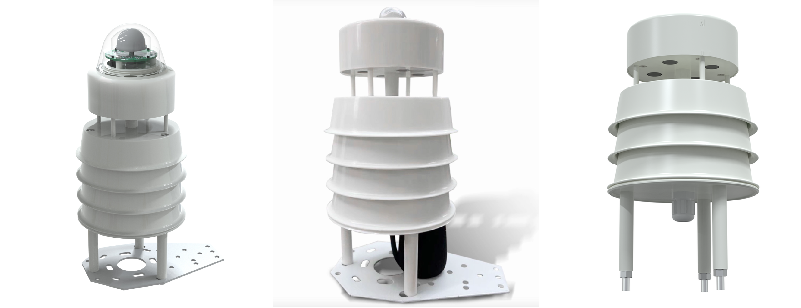
The integrated micro‑meteorological sensor is multi‑parameter monitoring hardware developed for outdoor industrial scenarios. Compact integrated‑casting housing with hidden‑probe design eliminates obstruction against natural wind and prevents snow‑rain accumulation that distorts measured values. No mechanical rotating parts for ultrasonic wind‑speed‑and‑direction measurement.
Modular‑design sensing units include ultrasonic wind‑speed‑and‑direction transducer, temperature‑humidity sensor, atmospheric‑pressure sensor, optical rainfall gauge, noise sensor, PM2.5/PM10 sensor and illuminance sensor. Monitoring elements can be freely added or removed according to project‑specific requirements.
Dual‑mode RS485 & WIFI communication is standard; 4G communication can be customized on request. It passes EMC electromagnetic‑compatibility certification and reaches IP66 dust‑and‑water‑proof rating. It supports DC10‑30 V wide‑voltage power supply or optional solar‑panel plus energy‑storage‑battery autonomous power‑supply scheme. Pole‑mount installation with complete mounting accessories for quick field deployment.
Functional Features
① High‑precision & High‑performance: Industrial‑grade sensing components with multi‑point factory calibration deliver high‑accuracy measurement and low data deviation. ② Modular Multi‑parameter Configuration: Sensing elements can be combined freely; measuring range and precision can be customized for different projects. ③ Multiple‑power‑supply Options: DC wide‑voltage power‑supply or solar off‑grid power‑supply solutions are available for remote field sites. ④ Low‑power‑consumption Design: Optimized acquisition cycles reduce overall system power consumption, adapting to harsh outdoor working conditions. ⑤ Integrated Hidden‑probe Structure: Avoid natural‑wind shielding; prevent snow‑rain accumulation from affecting measurement accuracy; no mechanical wearing parts for ultrasonic wind measurement. ⑥ Platform Interconnection: Connectable to smart monitoring platform for real‑time‑data viewing, over‑limit automatic alarms, historical‑record query and one‑click data export; mobile‑phone APP is also supported.
Technical Specifications
Parameter Item | Standard Specification |
|---|---|
Communication Method | Standard: RS485, WIFI; Optional: 4G customization |
Supported Protocols | Modbus‑RTU, MQTT, Modbus‑TCP (expandable & customizable) |
Main‑control Chip | 32‑bit industrial‑grade MCU |
Standard Monitoring Elements | Temperature, Humidity, Wind Speed, Wind Direction, Atmospheric Pressure, Optical RainfallOptional: Noise, PM2.5/PM10, Illuminance |
Temperature Measuring Range | ‑40℃~+80℃; Accuracy ±0.3℃@25℃ |
Humidity Measuring Range | 0~95% RH (non‑condensing); Accuracy ±3% RH (5‑95% RH) |
Wind‑speed Measuring Range | 0~60 m/s; Accuracy ±(0.2 m/s±0.02*V); withstand 75 m/s gust |
Wind‑direction Measuring Range | 0~359° full‑azimuth; Accuracy ±3° |
Atmospheric‑pressure Measuring Range | 0~120 kPa; Accuracy ±0.15 kPa@25℃/75 kPa |
Optical Rainfall | Resolution 0.1 mm; Accuracy ±5%; Max instantaneous 24 mm/min |
PM2.5/PM10 Measuring Range | 0~1000 μg/m³; Accuracy ±10% |
Noise Measuring Range | 30~120 dB; Accuracy ±0.5 dB |
Illuminance Measuring Range | 0~200000 Lux; Accuracy ±7% |
Power‑supply Mode | DC10‑30 V wide‑voltage DC; Optional: Solar + energy‑storage‑battery power‑supply |
Operating Environment | ‑40℃~80℃, 0~95% RH non‑condensing |
Ingress‑protection Rating | IP66 dust‑proof & water‑proof |
Installation Method | Pole‑mount installation with complete mounting accessories |
Product Certification | EMC Electromagnetic‑compatibility Certification |
Customizable Items | Monitoring‑element configuration, measuring‑range & precision, communication parameters, appearance, LOGO, packaging, protocol adaptation & development |
Introduction of Each Sensing Module
‑ Ultrasonic Wind‑speed‑and‑direction Transducer: Four ultrasonic probes transmit and receive ultrasonic signals in 2‑D plane. Wind‑speed‑induced time‑difference variation of ultrasonic signals is adopted to calculate wind speed and wind direction. No mechanical rotating components. ‑ Atmospheric‑pressure Sensor: Composed of measuring element and micro‑processor. The measuring element converts applied pressure into displacement or strain, further transformed into electrical‑signal proportional to pressure value. ‑ Temperature‑humidity Sensor: Digital‑type sensor for ambient air temperature and humidity collection. ‑ **Optical Rainfall Gauge: Adopts optical‑induction principle with multiple built‑in optical probes for reliable rainfall detection. ‑ Noise Sensor: Measures sound intensity with A‑weighting filter. ‑ PM2.5/PM10 Sensor: Adopts laser‑scattering principle with fan‑driven air intake and built‑in insect‑proof mesh to avoid measurement deviation caused by insects. ‑ Illuminance Sensor: Visible‑band photosensitive diode converts light intensity into weak electrical signal, processed into RS485 output signal by advanced circuit. ‑ Optional Compass Function: After enabling this function, there is no requirement for orientation adjustment during field installation.
Intelligent Meteorological Host
Product Introduction
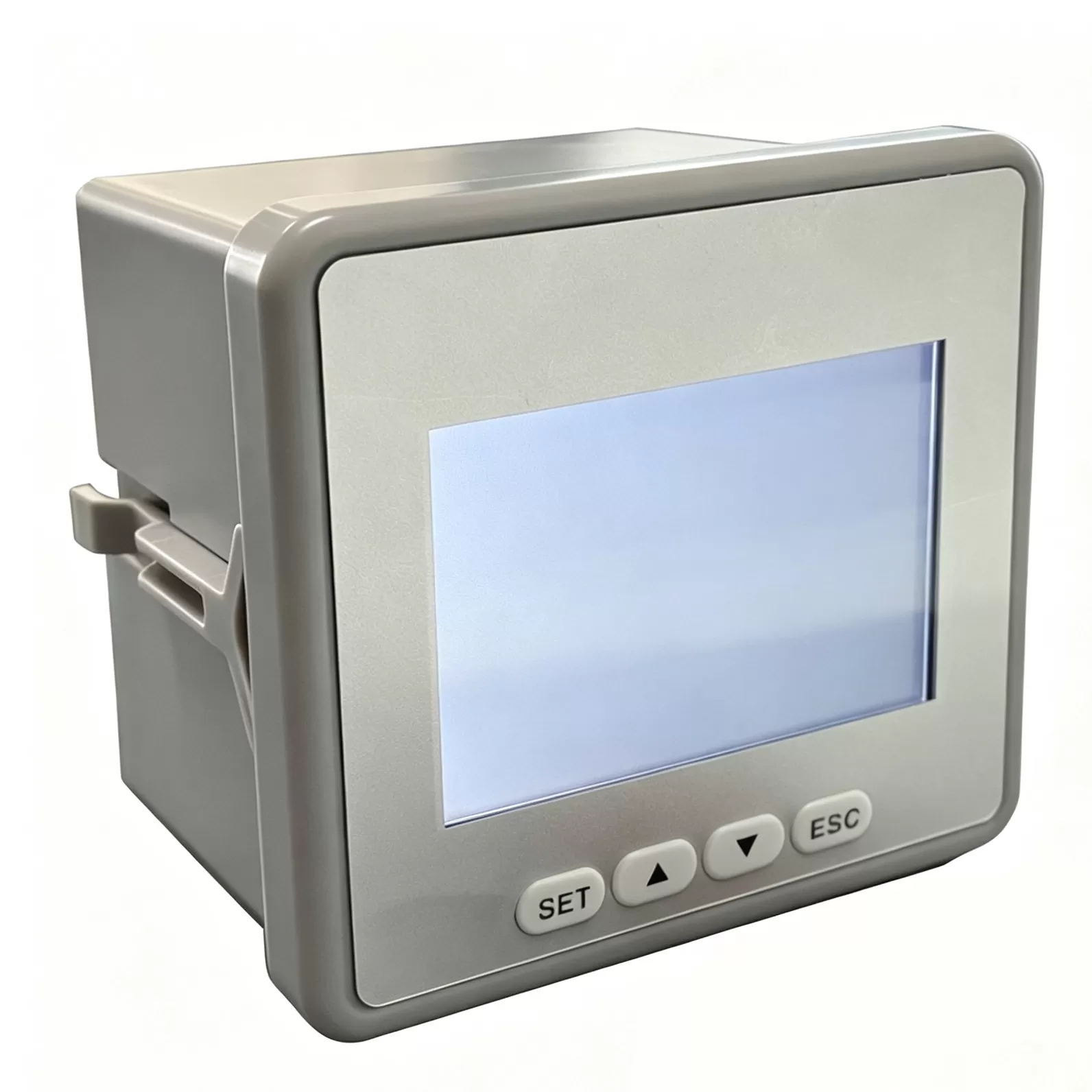
The intelligent meteorological host realizes real‑time monitoring of all micro‑meteorological data. It conducts analysis, processing and storage for historical data, gives early warning for equipment faults and guarantees reliable system operation. Hardware design fully considers high‑temperature resistance, low‑temperature resistance, corrosion‑resistance and lightning‑protection performance for field environments.
Functional Features
① Multi‑mode Communication: Supports 4G wireless communication and RS485 communication for convenient network‑system construction. ② Multi‑channel Data Transmission: Real‑time signal acquisition, recording, display and alarm‑processing for more than 240 channels. ③ Temperature‑related Alarm: 24‑hour continuous data acquisition. Upon high‑temperature events, alarms are pushed to users via SMS, WeChat mini‑program, APP and PC‑side terminals. ④ Remote‑upgrade Support: Whole‑unit firmware upgrade can be completed by automatic platform connection to reduce disassembly‑maintenance cost. ⑤ Safe Structure: Wiring terminals on rear‑panel enable fast and safe wiring. Snap‑fit housing prevents unintended disassembly by non‑professional personnel. ⑥ Human‑machine Interface: 3.2‑inch color‑LCD screen for intuitive data display; four multi‑function keys for local parameter configuration.
Technical Specifications
Parameter Item | Standard Specification |
|---|---|
Display Mode | 3.2‑inch color‑LCD display; resolution 320*240 |
Wireless Remote Transmission | 4G (full‑netcom) |
Wireless Frequency | 433 MHz |
Operating‑voltage | AC220V~ (DC12V optional) |
Communication Interface | RS485 |
Whole‑unit Power Consumption | ≤10 VA |
Communication Protocol | MODBUS‑RTU, MODBUS‑TCP |
Operating Temperature | ‑20℃~+70℃ |
Baud Rate | Optional:1200, 2400, 4800, 9600, 19200 bps |
Operating Humidity | ≤90% RH, non‑condensing & non‑corrosive |
Cut‑out Dimension | 92.50 mm×72.95 mm |
Installation Method | Embedded cabinet‑mount installation |
Solar Power‑supply System
Product Introduction
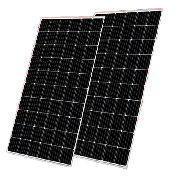
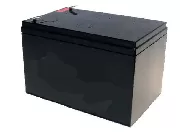
The solar power‑supply system is composed of solar‑panel assembly, solar controller and storage battery. Solar photovoltaic power‑generation converts light energy directly into electric energy by photovoltaic effect of semiconductor interfaces. The system features compact structure, no noise, zero‑pollution, high reliability, long service‑life and easy installation & maintenance.
Technical Specifications
Parameter Item | Specification |
|---|---|
Solar‑panel Power | 60 W |
Solar‑panel Output‑voltage | 18 V |
Solar‑panel Dimension | 670*540 mm |
Gel Battery | 12V 38AH |
Battery Dimension | 19.516.517 cm |
Total Weight | Approx. 12.3 KG |
Solar Charge‑discharge Controller | 10 A |
Electric‑control Cabinet
Product Introduction
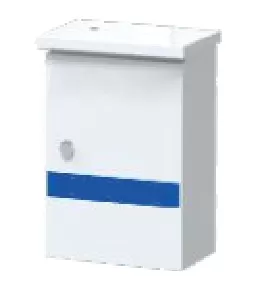
High‑strength protective cabinet that protects internal circuits from damage caused by harsh outdoor environments.
III. Software Products
1. Micro‑meteorology Monitoring Platform
Platform Features
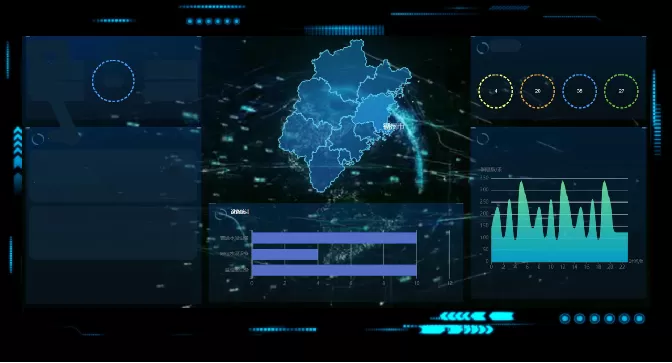
① Secure Permission‑based Architecture: Three‑level account‑authority design realizes data isolation for different users and hierarchical‑permission management for primary‑accounts and sub‑accounts. ② User‑friendly Interaction: Real‑time online viewing of monitoring data; export of monitoring data from multiple sites. ③ Rich‑management Functions: Personnel‑management, operation‑record management, site‑management and other modules.