




The 2026 AIoT Guide: Deploying Temperature and Humidity Acquisition Sensors at Scale
Industrial facility managers and systems architects no longer treat climate monitoring as a secondary maintenance task. In modern operations, ambient variables dictate process yields, equipment lifespans, and energy baselines.
Meeting these demands requires an agile physical data layer. Deploying an enterprise temperature and humidity acquisition sensor network enables continuous oversight across thousands of square meters. Hardware specialists like HAOSHENG supply industrial-grade sensor nodes that deliver steady telemetry under punishing factory conditions.
If you are planning a facility retrofit or building a new telemetry pipeline, submit an inquiry to our application engineering team today to review custom hardware specifications and volume deployment schedules.
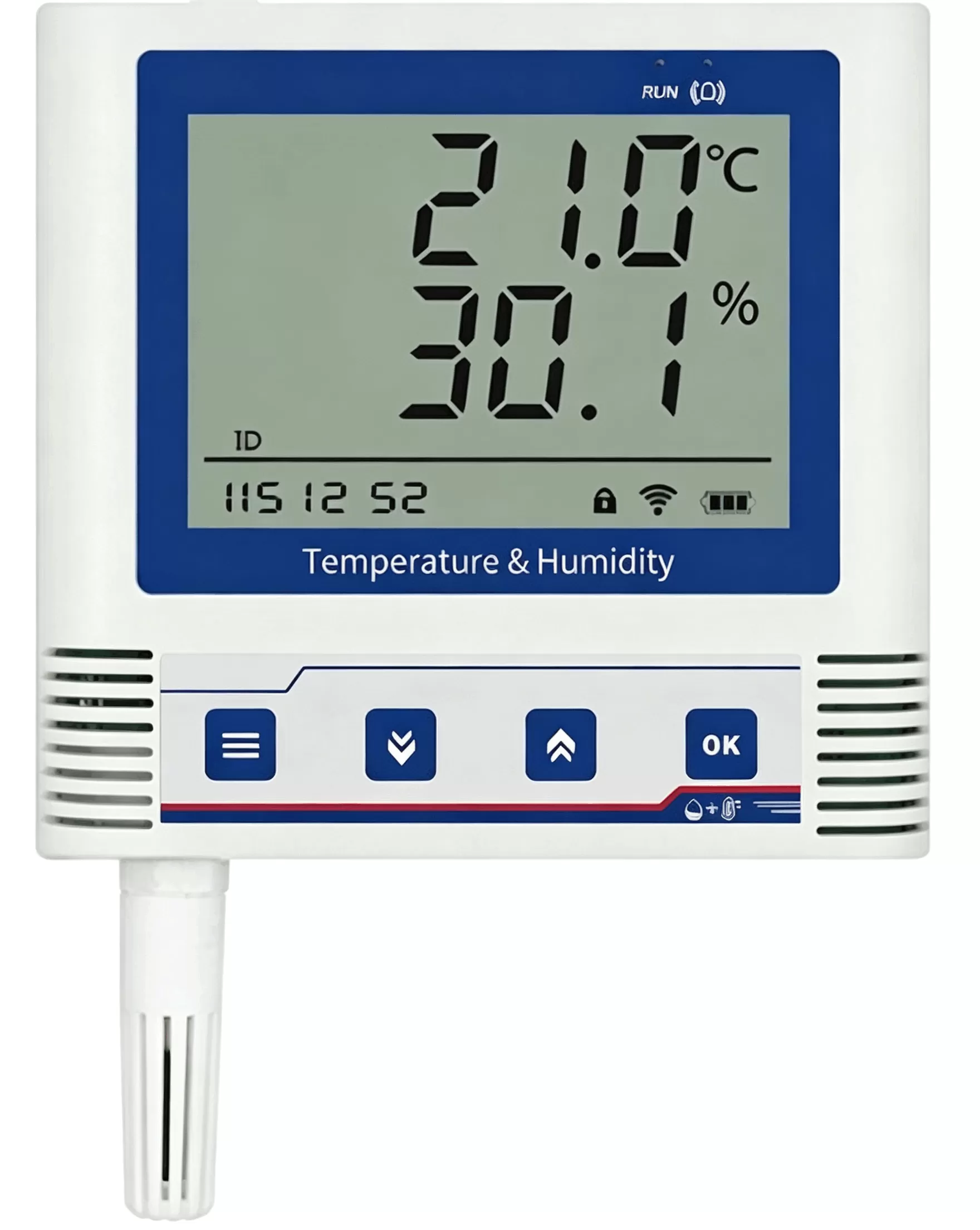
1. The 2026 Technical Shift in Environmental Data Acquisition
Historically, environmental monitoring relied on manual walk-throughs or siloed chart recorders. Operators checked readouts once per shift, logged values on paper, and reacted only after materials spoiled or machinery overheated.
Today, physical sensing merges directly with distributed computational logic. A modern temperature and humidity acquisition sensor does far more than change resistance as moist air passes by. It samples data, runs onboard conditioning algorithms, and transmits packetized telemetry to local edge gateways.
Scaling these physical deployments introduces three primary operational roadblocks:
- Protocol Fragmentation: Industrial sites often combine 30-year-old serial lines with modern sub-gigahertz wireless mesh nodes.
- Sensor Drift: Microscopic contaminants, volatile organic compounds (VOCs), and continuous thermal cycling degrade sensing elements over time, skewing measurements.
- Maintenance Costs: Manually calibrating or replacing thousands of distributed sensor probes drains maintenance budgets without predictable service lifecycles.
2. Sensor Fundamentals and Architectural Design
Specifying the right temperature and humidity acquisition sensor requires an understanding of how sensing materials interact with gas and heat molecules at the physical boundary layer.
Capacitive vs. Resistive vs. Bandgap Digital ICs
Capacitive relative humidity (RH) sensors dominate industrial telemetry. They measure changes in the dielectric constant of a thin polymer layer sandwiched between two permeable electrodes. As ambient moisture enters the polymer, capacitance shifts linearly with relative humidity. These components offer fast response times and low hysteresis across wide temperature ranges.
Resistive sensors measure electrical impedance changes within a conductive salt or polymer base. While cost-effective, they exhibit non-linear output curves and suffer in high-moisture settings where condensation degrades the substrate.
Modern digital ICs combine bandgap temperature elements with capacitive RH structures directly on a single silicon die. The silicon houses the analog-to-digital converter (ADC), calibration memory, and communications logic in an ultra-compact footprint.
Signal Conditioning and Industrial Output Protocols
Raw analog signals cannot travel through electrically noisy factories without distortion. Engineers must select the correct physical layer interface:
- 4-20 mA Current Loops: Excellent for long wire runs exceeding 300 meters. The current remains stable regardless of line resistance, ignoring heavy electromagnetic interference from nearby variable frequency drives.
- 0-10 V Voltage Outputs: Simple to wire into legacy programmable logic controllers (PLCs), but susceptible to voltage drops and ground differential noise over extended runs.
- RS-485 Modbus RTU: The reliable industrial standard. Differential signaling over shielded twisted pair cabling allows multi-drop wiring of up to 32 nodes per segment without signal loss.
- I2C and SPI Digital Busses: Reserved for board-level integration within dedicated sensor probe housings, typically limited to cable lengths under 30 centimeters.
The 2026 Smart Sensor Node Architecture
Modern acquisition hardware no longer streams raw, unverified data. Sensor nodes now combine low-power ARM Cortex-M microcontrollers with the primary sensing element. The MCU stores factory calibration coefficients, executes moving-average digital filters, and calculates secondary values like dew point and absolute humidity before transmitting packets.
3. Five Core Selection Criteria for Enterprise Deployments
Selecting hardware for a small test bench differs vastly from procuring thousands of field units. Weigh these five criteria before issuing procurement orders:
1. Precision, Response Time, and Hysteresis
Check the manufacturer specification curves across the entire operational curve, not just at 25°C. High-performance units maintain ±0.2°C temperature accuracy and ±1.5% RH precision across 10% to 90% RH bands. Ensure response time (tau 63%) remains under 8 seconds to capture rapid thermal swings, while keeping hysteresis under 1% RH to prevent directional measurement drift.
2. Field Network Protocol Compatibility
Select your transport layer based on facility infrastructure:
- Wired Fieldbuses: RS-485 Modbus and Industrial Ethernet provide uninterrupted uptime in high-EMI environments.
- LoRaWAN: The premier wireless choice for sprawling facilities and agriculture. It penetrates concrete decks and reaches nodes up to 5 kilometers away at low data rates.
- NB-IoT and 5G RedCap: Ideal for distributed outdoor assets, shipping containers, and municipal utility vaults lacking private gateway infrastructure.
- Matter and Thread: Gaining traction in commercial real estate and smart office HVAC integration due to standardized IP routing.
3. Power Consumption and Energy Harvesting
Wired power lines dramatically drive up field installation costs. Battery-operated wireless nodes require high-capacity Lithium Thionyl Chloride (Li-SOCl2) batteries coupled with deep-sleep firmware routines. Look for quiescent standby currents below 2 microamps. In high-illumination or high-vibration plants, combine micro-solar cells or thermal energy harvesters to extend battery life beyond 10 years.
4. Enclosure Integrity and Environmental Hardening
Industrial dust, washdown chemicals, and atmospheric condensation destroy unprotected silicon. Specify IP65 enclosures for general industrial spaces and IP67 or IP68 enclosures for washdown environments. Protect the internal sensing die with a sintered metal cap or a porous PTFE membrane. These materials allow water vapor molecules to pass freely while blocking liquid droplets, dust, and oil aerosols.
5. Long-Term Drift Stability
Every humidity sensor drifts over time due to polymer aging and trace chemical poisoning. Top-tier hardware limits drift to less than 0.25% RH per year. Select sensors featuring internal heaters; periodic micro-heating cycles vaporize condensed moisture and volatile contaminants, restoring factory accuracy without manual intervention.
4. AIoT Architecture: Integrating Sensors from Edge to Cloud
Sensor hardware generates raw value only when clean data feeds analytical engines. The modern AIoT pipeline moves environmental metrics smoothly through four distinct structural layers:
The physical temperature and humidity acquisition sensor continuously monitors the environment. It pushes conditioned digital packets to an industrial edge gateway via RS-485 or sub-gigahertz wireless links. The gateway aggregates data from dozens of nodes, packages readings into lightweight JSON payloads over MQTT or Sparkplug B, and transmits them to central supervisory software or cloud brokers.
Engineers deploy robust hardware suites, such as those engineered by HAOSHENG, to anchor this architecture. These field devices combine precision front-ends with resilient communications boards, ensuring edge platforms receive uncorrupted telemetry.
Edge microcontrollers and gateways apply machine learning inference models at the local boundary layer:
- Outlier Filtering: Local algorithms detect momentary spikes caused by intermittent physical contact, scrubbing erratic readings before they reach the central database.
- Virtual Sensing and Predictive Drift: Edge models compare readings across neighboring nodes. If three sensors read 45% RH while a fourth reads 62%, the algorithm flags the anomalous node for calibration instead of triggering an accidental HVAC alarm.
- Fast Control Loops: Local gateways run closed-loop PID control against local heating, cooling, and dehumidification actuators, maintaining millisecond reaction times without depending on cloud server connections.
5. High-Impact Industrial Applications
Different industries impose drastically different operating constraints on environmental monitoring hardware.
Pharmaceutical Manufacturing and Cold Chain Logistics
Pharmaceutical cleanrooms and cold-storage depots must comply with stringent regulations, including FDA 21 CFR Part 11 and cGMP guidelines. In these environments, sensors must maintain secure, tamper-evident data logs with verifiable audit trails. Wireless nodes equipped with onboard flash memory safeguard continuous records during network outages, syncing backlogged data as soon as connectivity resumes.
High-Density Data Centers
Modern data centers generate severe thermal density across server racks. Operators follow ASHRAE TC 9.9 thermal guidelines to push intake temperatures higher, cutting chiller electricity consumption. Deploying a high-density temperature and humidity acquisition sensor array creates real-time, 3D rack heat maps. Facility managers can pinpoint localized hot spots, balance server fan speeds, and verify chilled-air delivery across perforated floor tiles.
Precision Agriculture and Commercial Greenhouses
Agricultural yields depend directly on the Vapor Pressure Deficit (VPD)—the difference between internal leaf moisture pressure and ambient air moisture pressure. Standard relative humidity measurements provide an incomplete picture. Smart agro-telemetry nodes compute VPD at the physical edge, controlling misting systems and roof louvers to optimize plant transpiration rates.
Semiconductor and Lithium-Ion Cleanrooms
Lithium-ion battery production demands ultra-dry rooms where relative humidity levels must remain well below 1% (dew points below -40°C). Standard capacitive polymers lose sensitivity at these extremes. Specialized deep-dry-room transmitters utilize specialized capacitive structures with hydrophobic fluoropolymer layers to detect trace moisture spikes before they ruin raw electrolyte chemistries.
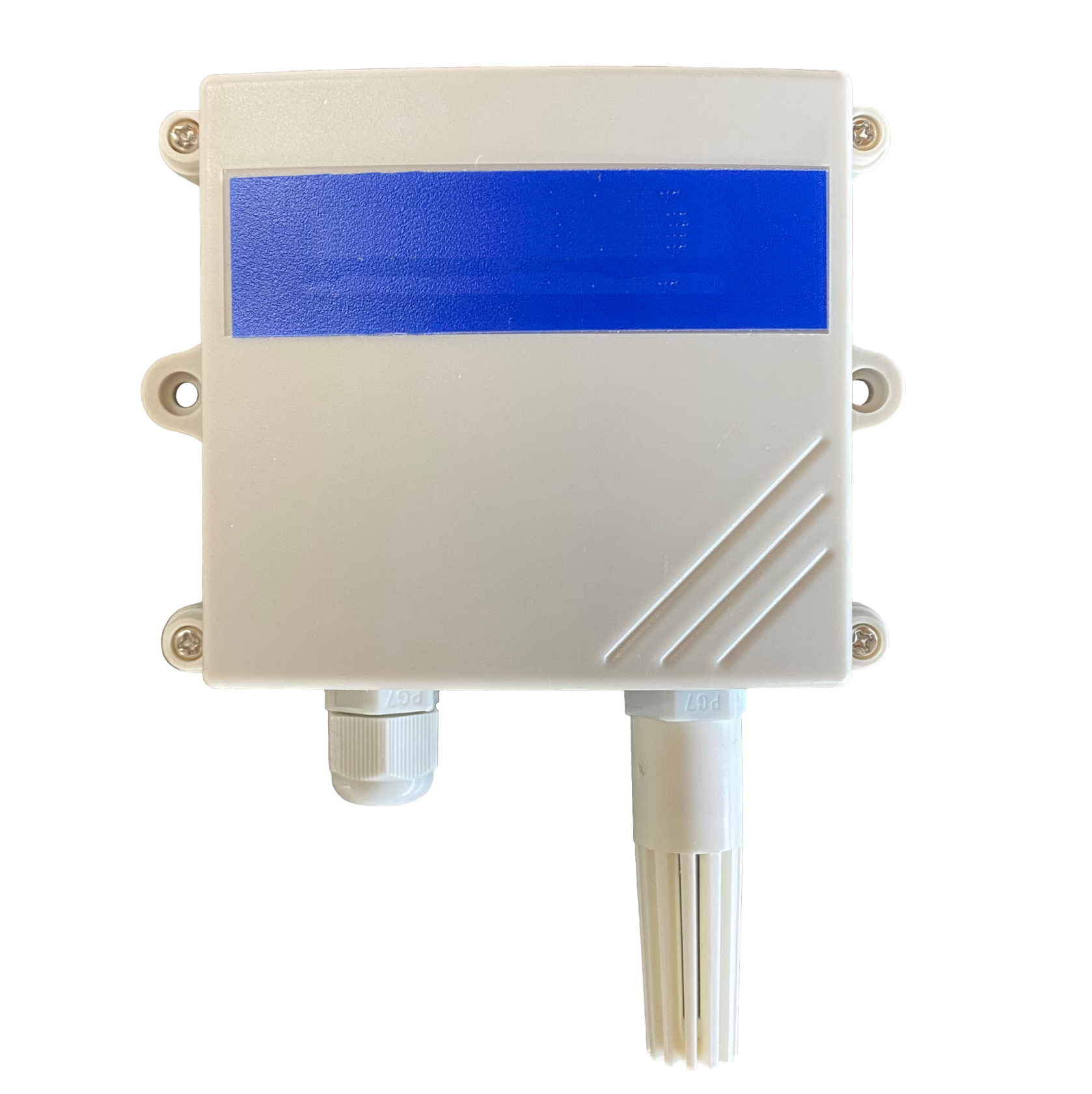
6. Step-by-Step Enterprise Deployment Strategy
A failed rollout rarely stems from bad sensor chips; it stems from planning oversights during field installation. Follow this implementation blueprint to protect project schedules:
Phase 1: Environmental Mapping and Node Placement
Never mount sensors directly on cold exterior walls, near exterior access doors, or directly in line with supply air diffusers. These positions create localized microclimates that skew representative ambient readings. Mount probes at breathing height (1.5 to 1.8 meters above finished floor) within general circulation zones, and shield them from radiant heat generated by large motors or direct sunlight.
Phase 2: Zero-Touch Provisioning (ZTP)
Commissioning hundreds of field devices manually invites human error. Implement a structured provisioning system:
- Affix machine-readable QR codes encoding the hardware MAC address, serial number, and encryption keys to each enclosure.
- Use mobile field tools to scan the physical sensor, link it to the site digital twin, and bind it to specific room assets in under two minutes.
- Enable automated dynamic node registration through the edge gateway via pre-configured MQTT discovery topics.
Phase 3: Maintenance Routines and FOTA Management
Ensure your hardware supports Firmware Over-The-Air (FOTA) updates. Operating systems, wireless security patches, and edge inference weights evolve over time. Distributing differential binary firmware files over low-bandwidth LoRaWAN or mesh networks eliminates the need to dispatch technicians with physical programming cables.
7. Troubleshooting & FAQs
Q1: How do you recover a temperature and humidity acquisition sensor after prolonged 100% RH condensation?
A1: Prolonged saturation traps liquid water droplets inside the porous polymer structure, causing output values to latch at 100% RH even after ambient conditions dry out. High-grade industrial sensors feature internal heating resistors. Activating this on-chip heating cycle bakes the sensing matrix, boiling off microscopic condensation within minutes. If the hardware lacks a built-in heater, dismount the probe and bake it in a controlled oven at 60°C for four hours, followed by a 24-hour rehydration period at room temperature.
Q2: How do you eliminate RS-485 communication drops across noisy manufacturing floors?
A2: Communication drops over RS-485 serial busses typically stem from three electrical issues: improper bus termination, ground loops, or floating signals. Ensure you install a 120-ohm termination resistor across the differential lines (A and B) at the two physical ends of the bus. Never route communication cables in the same tray as high-voltage AC motor drives. Finally, install optoisolated RS-485 transceivers to break ground loops caused by voltage differences between distant building sub-panels.
Q3: How often must an enterprise environmental sensor network be recalibrated?
A3: Calibration intervals depend on regulatory compliance rules and environmental contaminants. Regulated pharmaceutical cleanrooms and medical cold rooms require annual traceable calibrations (ISO 17025 or NIST-traceable standards). General industrial spaces can operate on two- to three-year cycles if using low-drift sensors. Utilizing edge anomaly detection software allows facilities to move toward condition-based calibration, scheduling manual inspections only when a node drifts outside baseline variance limits.
Q4: Why do wireless telemetry nodes report unexpected humidity spikes in sub-zero freezers?
A4: Sub-zero telemetry units register false spikes when freezer doors open, drawing warm, moist ambient air inside. This moist air instantly condenses on the cold sensor probe casing. To prevent measurement errors, place the sensor away from door vestibules, equip the probe with a sintered brass or PTFE cap to block airborne frost crystals, and program local firmware to apply rolling median filters that ignore short spikes caused by brief stocking access.
Q5: Can wireless LoRaWAN acquisition sensors broadcast through metal warehouse racking or cleanroom panels?
A5: Metal warehouse racking, insulated cold-storage panels, and cleanroom aluminum walls act as Faraday cages, absorbing or reflecting RF energy. To overcome this limitation, choose nodes that support external antennas on coaxial leads. Mount the sensing probe inside the cold or shielded room while extending the antenna through a sealed conduit into an open corridor. Alternatively, install distributed indoor LoRaWAN micro-gateways connected via Power-over-Ethernet (PoE) along primary facility aisles.
8. Summary and Implementation Checklist
Deploying stable environmental sensing at scale demands balanced design choices across physical, electrical, and network layers. Modern operations require reliable industrial hardware capable of withstanding moisture, chemicals, and electrical noise without continuous manual maintenance.
Follow this high-level verification list before commissioning field networks:
- Select capacitive sensing elements protected by sintered metal or PTFE filter caps.
- Verify precision curves over the full operational envelope, ensuring low drift (<0.25% RH/year).
- Match communication protocols to plant constraints: wired RS-485 Modbus for high-EMI zones; LoRaWAN for wide-area sites.
- Establish zero-touch provisioning workflows using QR codes to simplify site commissioning.
- Integrate edge gateways running local outlier detection to clean data streams before cloud storage.
HAOSHENG provides reliable, high-precision industrial hardware engineered for demanding telemetry networks. Whether you manage regional cold chains, critical cleanrooms, or high-density server halls, our engineering team can review your site requirements, supply evaluation units, and support your integration pipeline.
Ready to upgrade your enterprise environmental network? Contact our technical team today to request a project quotation and review field-tested hardware configurations.