




Wireless vs. Wired: Selecting the Best Cable Tunnel Temperature and Humidity Sensor Architecture for IoT
Underground cable tunnels house critical transmission and distribution lines, often operating under severe thermal and environmental stress. High relative humidity, seasonal seepage, poor natural ventilation, and continuous heat emission from high-voltage cables create a hazardous environment. A single undetected hotspot can quickly trigger insulation breakdown, catastrophic fires, and prolonged grid outages.
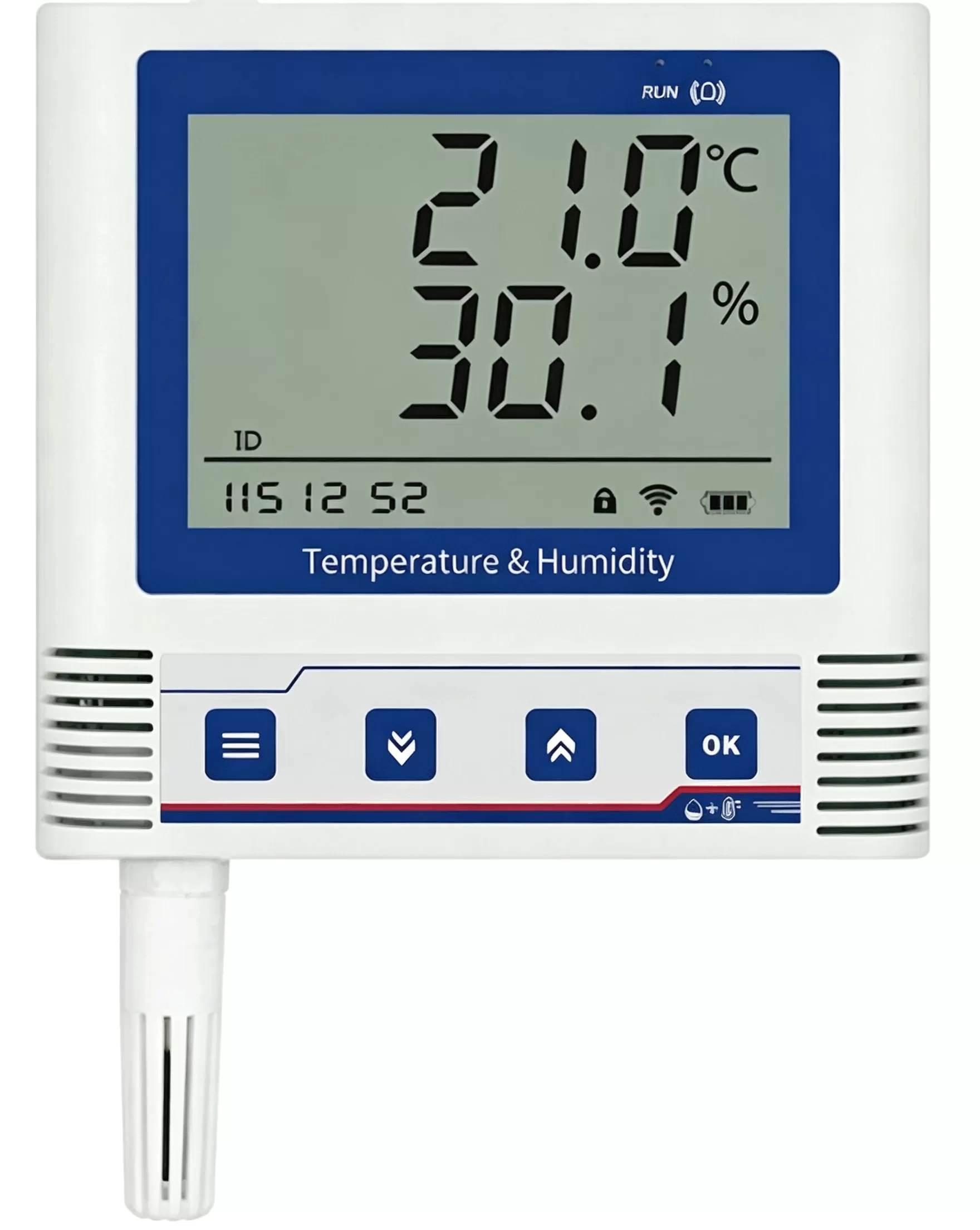
Deploying a dedicated Cable Tunnel Temperature and Humidity Sensor network provides continuous visibility into these enclosed assets. However, system architects face a fundamental dilemma: should you deploy a time-tested wired monitoring infrastructure, or leverage a modern wireless IoT architecture? At HAOSHENG, we engineer environmental telemetry solutions tailored to these exact conditions, helping operators eliminate systemic blind spots.
If you are planning an upgrade or engineering a greenfield installation, selecting the wrong infrastructure can drive capital expenditures beyond budget or leave maintenance crews fighting constant communication dropouts. Reach out to the HAOSHENG technical team today to request our underground monitoring blueprint or schedule an engineering consultation.
Why Underground Cable Tunnels Demand Precise Temperature and Humidity Monitoring
High-voltage power cables generate substantial resistive heat under heavy loads. In a confined tunnel, ambient temperatures rise rapidly if heat dissipation fails. If ambient conditions exceed design limits, cable ampacity drops, insulation materials degrade prematurely, and thermal runaway becomes a real danger.
Simultaneously, humidity acts as a silent catalyst for electrical failure. Moisture accelerates the formation of water trees within cross-linked polyethylene (XLPE) insulation, which progressively degrades dielectric strength. Condensation on terminal joints, splice boxes, and support racks promotes surface tracking and partial discharge phenomena.
Industrial IoT (IIoT) sensors eliminate the hazards and blind spots of manual inspections. By measuring dry-bulb temperature and relative humidity in real time, operators can calculate dew points, detect cooling fan failures, and run predictive maintenance routines long before smoke detectors or fire alarms trigger.
Wired Sensor Architectures: High Reliability in Demanding Environments
Wired sensing systems have long served as the standard for utility-grade tunnel telemetry. These architectures typically rely on RS485 industrial buses running Modbus RTU, distributed fiber-optic temperature sensors (DTS), or ruggedized Industrial Ethernet links connecting physical sensor nodes back to central substations.
Core Advantages of Wired Networks
- Immunity to RF Signal Blockage: Reinforced concrete tunnels, heavy steel bulkheads, and fire barriers destroy wireless radio waves. Wired physical buses bypass these barriers effortlessly, running uninterrupted along walls and cable trays.
- Dedicated Line Power: Wired configurations deliver operating voltage through power-over-bus or external low-voltage supplies. Field sensors operate continuously without requiring battery replacements.
- Superior Immunity to Electromagnetic Interference (EMI): High-voltage cables create intense magnetic fields and transient switching surges. Properly shielded twisted-pair cables (such as STP with galvanized conduits) maintain signal integrity through severe electrical disturbances.
- Minimal Data Latency: Hardwired buses deliver low-latency telemetry, enabling automated trigger actions like firing ventilation fans or tripping circuit breakers when thermal limits are crossed.
Technical Challenges and Trade-offs
- High Capital and Installation Costs: Running hundreds of meters of flame-retardant, armored cable inside hazardous spaces demands expensive labor, rigid cable tray allocations, and strict safety procedures.
- Physical Vulnerability: A single rockfall, localized fire, or structural shear can sever the physical bus. Unless configured in a redundant ring, one cable break can silence downstream monitoring clusters.
- Corrosion Hazards: Humid tunnel air rich in sulfur compounds or moisture quickly attacks cable glands, terminal blocks, and conduit joints, creating short circuits over time.
Wireless Sensor Architectures: Rapid Deployment for Modern IoT
Wireless IoT platforms have evolved rapidly to address the high costs and physical constraints of wired deployments. Modern systems rely on Low Power Wide Area Networks (LPWAN), including LoRaWAN, NB-IoT, and proprietary Sub-1GHz mesh protocols designed to pierce harsh subterranean obstructions.
Key Advantages of Wireless Systems
- Rapid, Non-Intrusive Installation: Battery-operated wireless nodes mount directly to tunnel ceilings, brackets, or joint bays via magnetic bases or simple mechanical brackets. Crews can install dozens of nodes in hours without scheduling extensive power outages.
- Exceptional Scalability: Adding extra sensors to monitor microclimates near cable splices or damp sump areas requires zero infrastructure changes. You simply register the new device ID on your IoT network server.
- Complete Physical Isolation: Because wireless nodes carry no physical wires, they eliminate ground loops and cannot conduct high-voltage transient surges back to control room servers.
Overcoming Wireless Constraints
- Radio Frequency Attenuation: Concrete tunnels act as complex RF waveguides, creating severe multi-path reflections and rapid signal decay. Solving this issue requires directional antennas, intermediate LoRaWAN repeaters, or ceiling-mounted leaky coaxial feeder cables.
- Battery Longevity Management: Humidity sensors with heated sensing elements consume measurable current. Field nodes require dynamic transmission intervals, ultra-low-power sleep modes, and high-capacity Lithium Thionyl Chloride (Li-SOCl2) batteries to achieve multi-year lifespans.
Modern field hardware, such as the ruggedized wireless units developed by HAOSHENG, combines power-thrifty firmware with advanced ingress protection to maximize battery life without compromising critical alarm delivery.
Comprehensive Comparison: Wired vs. Wireless Sensor Architectures
Selecting between these two topologies requires evaluating installation overhead, maintenance access, and operational risks. The table below summarizes the key trade-offs:
| Evaluation Parameter | Wired Architecture (RS485 / Modbus) | Wireless Architecture (LoRaWAN / Sub-1GHz) |
|---|---|---|
| Initial Installation Cost (CAPEX) | High; requires conduit, labor, and safety clearances. | Low to Moderate; simple mounting with minimal labor. |
| Ongoing Maintenance (OPEX) | Low; continuous power with no batteries to replace. | Moderate; periodic battery changes every 3 to 7 years. |
| Installation Speed | Slow; days or weeks of manual cabling. | Fast; minutes per sensing location. |
| Electromagnetic Immunity | Excellent (requires proper grounding and shielding). | Excellent (immune to conducted cable noise). |
| Network Resilience | Vulnerable to cable cuts unless deployed in a ring. | High; localized node failures do not compromise the fleet. |
| Signal Penetration | Direct copper or fiber path; unaffected by geography. | Constrained by concrete bends, bulkheads, and distance. |
| Sampling Frequency | Near real-time (sub-second or continuous). | Configurable interval (typically 1 to 15 minutes). |
Engineering Decision Framework: Matching Architecture to Tunnel Profiles
Tunnel construction methods, utility access, and operational budgets dictate which architecture delivers the highest return on investment. Use the following deployment guidelines to evaluate your facility:
Scenario A: New Long-Distance Transmission Tunnels
For newly constructed, long-distance tunnels spanning several kilometers with dedicated cable trays, wired architectures remain the gold standard. Running an industrial bus or optical fiber alongside the power lines during the civil construction phase minimizes labor costs. Operators benefit from continuous power, zero battery maintenance, and direct integration into substation SCADA networks.
Scenario B: Legacy Urban Utility Corridors and Retrofits
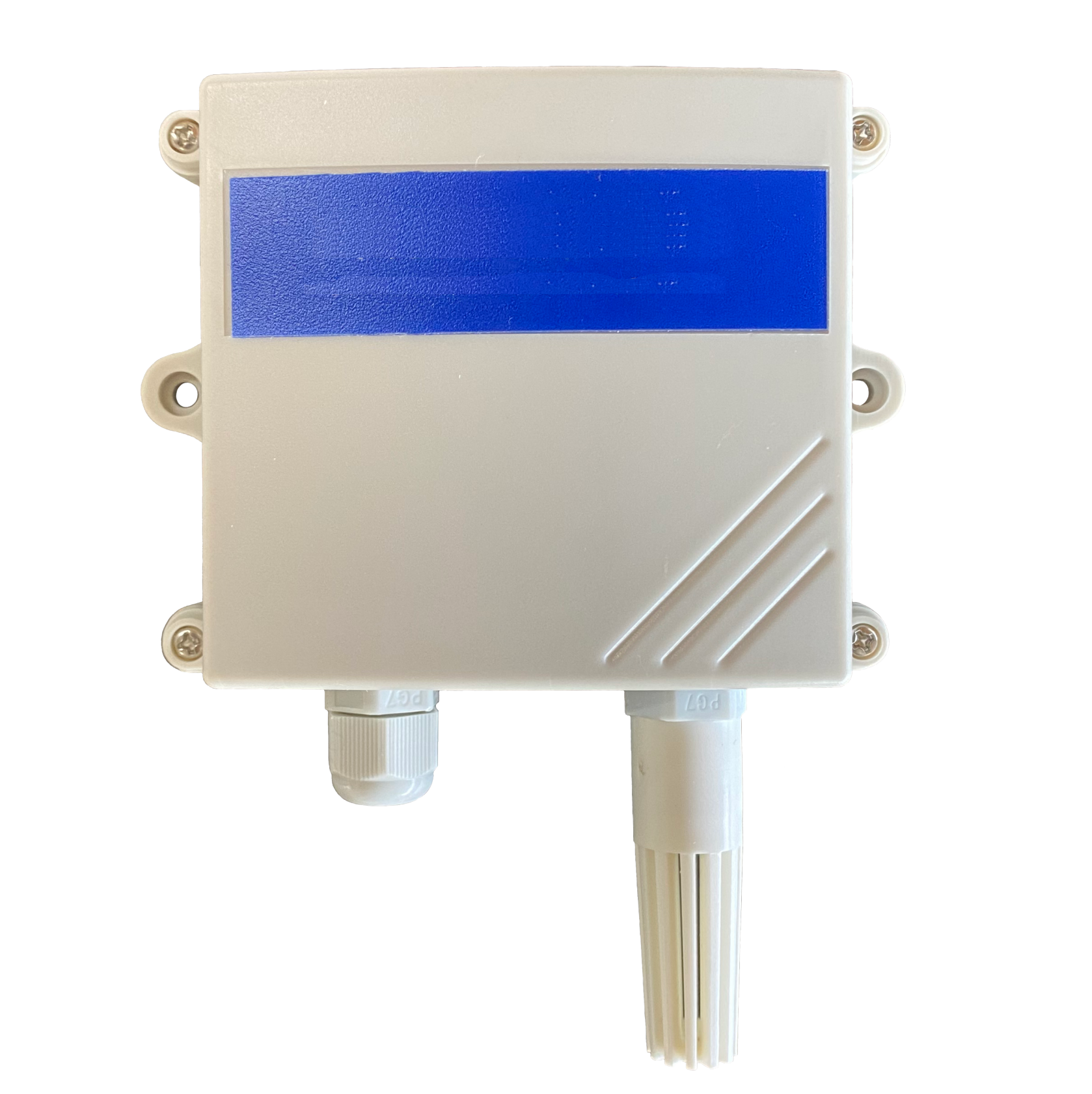
Older municipal tunnels present major installation hurdles. Cable trays are often overcrowded, access permits are heavily restricted, and drilling into aged concrete raises structural concerns. Here, wireless LoRaWAN or NB-IoT architectures are the only cost-effective choice. Maintenance teams can deploy a battery-powered Cable Tunnel Temperature and Humidity Sensor at high-risk joints and sump locations without pulling fresh copper lines through congested duct banks.
Scenario C: Substation Basements and Short Entry Trenches
Dense cable ingress zones near substations experience intense electromagnetic switching noise and intricate geometric turns. A hybrid architecture excels here: install wired sensors along critical feeder exits where power is accessible, and deploy battery-operated wireless nodes across complex secondary bends where pulling conduit is impractical.
The Hybrid Approach: Combining Wireless Flexibility with Wired Backbones
Forward-thinking utility operators increasingly reject the strict binary choice between wired and wireless. Instead, they build hybrid infrastructures that leverage the strengths of both systems.
In a hybrid design, a fiber-optic or RS485 data backbone runs straight along the main tunnel roof, powering rugged IoT gateways placed every 300 to 500 meters. These central gateways communicate directly with local clusters of wireless sensors deployed across cable trays, joint bays, and ventilation shafts.
This layout removes the operational headache of pulling complex branch cabling down to individual cable racks while sidestepping long-distance wireless signal loss through tunnel curves. If an expansion project requires monitoring five extra cable joints, technicians simply snap new wireless nodes into place, which immediately sync to the nearest wired gateway.
Frequently Asked Questions (FAQ)
Q1: Can wireless temperature and humidity sensors communicate through thick concrete tunnel walls?
A1: Radio waves at standard cellular or 2.4 GHz frequencies cannot effectively penetrate reinforced concrete tunnel walls or heavy cast-iron manhole covers. To establish reliable communication, wireless systems use Sub-1GHz frequencies (such as 868 MHz or 915 MHz LoRaWAN) that propagate down the tunnel corridor as a waveguide. Alternatively, engineers install external antenna extensions running up through ventilation shafts to reach surface gateways.
Q2: What is the minimum IP rating required for a Cable Tunnel Temperature and Humidity Sensor?
A2: Underground tunnels regularly experience condensation, standing water, and active hose-down cleaning. The sensor housing must meet at least an IP67 rating, while IP68 is strongly recommended for low-lying trench zones prone to seasonal flooding. The sensing probe itself should feature a breathable, hydrophobic sintered metal or PTFE filter cap to protect the internal transducer from liquid water while maintaining fast response times.
Q3: How long do sensor batteries last in humid underground conditions?
A3: High-quality industrial wireless nodes powered by Li-SOCl2 batteries typically achieve a service life of 3 to 7 years. The real-world operational lifespan depends directly on the reporting frequency, ambient temperature swings, and humidity levels. Tunnel environments that hold near 100% relative humidity require sensors with internal condensation-prevention heaters, which consume more power and must be programmed with optimized heating cycles.
Q4: How do high-voltage electromagnetic fields affect sensor accuracy?
A4: High-voltage cables generate significant 50/60 Hz electromagnetic fields, as well as transient high-frequency noise during switching events. Poorly shielded sensors can experience signal drift, false threshold alarms, or damaged microcontrollers. High-grade sensors use galvanic isolation, multi-layer shielded PCB layouts, and metal enclosures to maintain accurate readings right next to energized 110kV to 500kV circuits.
Q5: Why is relative humidity monitoring as critical as temperature tracking in power tunnels?
A5: While temperature reveals direct overload and thermal dissipation issues, humidity indicates the risk of structural insulation failure. High relative humidity combined with ambient temperature shifts causes condensation on cable splices, metal brackets, and busbars. This moisture creates surface tracking currents, accelerates electrochemical corrosion on structural supports, and triggers partial electrical discharges that lead directly to catastrophic insulation flashovers.
Final Recommendations and Next Steps
There is no universal solution for underground utility monitoring. Greenfield utility tunnels with clear access paths benefit from the low operational maintenance of wired networks. Conversely, complex retrofits, legacy distribution trenches, and rapidly expanding urban networks achieve faster ROI and superior flexibility using wireless IoT architectures.
For most modern utility operators, the hybrid approach offers the ideal balance: a robust wired backbone for primary transit paired with wireless edge sensors for rapid, flexible coverage. Selecting industrial-grade hardware built specifically for high humidity, water immersion, and severe electromagnetic interference remains the single most important factor for long-term project success.
HAOSHENG manufactures precision monitoring hardware and turnkey IoT telemetry platforms engineered to perform in the world's most demanding underground power environments. Contact our technical sales team today to discuss your project requirements, request detailed product specifications, or receive a customized architecture proposal for your cable tunnel network.