




Cable Vault Flood Sensor Solutions for Subsurface Utility & Substation Ingress
Underground electrical and telecommunications systems rely on subterranean chambers, utility tunnels, and distribution pits to route high-voltage circuits and fiber backbones. These confined spaces are exposed to perpetual environmental variables. Subsurface vaults face continual hydrostatic pressure, seasonal groundwater table fluctuations, municipal stormwater runoff, and secondary conduit leakage. When water enters these chambers unmonitored, the prolonged immersion of intermediate splices, cross-bonding link boxes, and transition joints causes dielectric breakdown, accelerated treeing in solid dielectric insulation, and catastrophic service interruptions. Maintaining total visibility over vault environmental conditions requires automated industrial monitoring. Implementing a dedicated Cable Vault Flood Sensor within an end-to-end industrial internet of things (AIoT) framework provides transmission system operators and utility engineers with direct, real-time insight into subterranean water ingress dynamics.
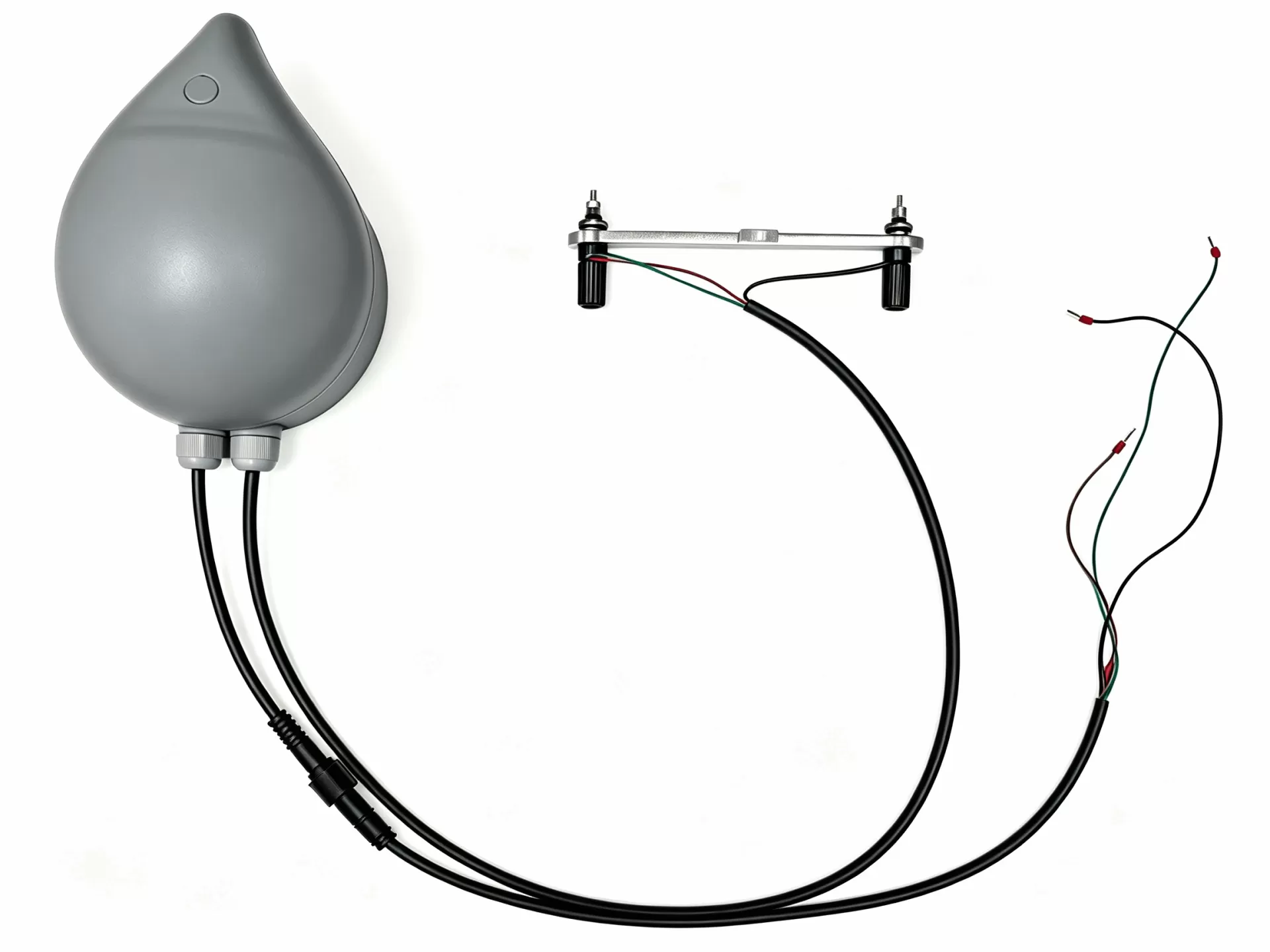
Subterranean Environmental Stressors and Water Ingress Dynamics
Subsurface utility chambers act as natural catchment basins for subterranean fluids. Water enters utility networks through multiple pathways that standard passive drainage systems cannot adequately handle over long service intervals:
- Hydrostatic Ground Pressure: Elevated water tables push moisture through micro-fissures in aged precast or poured-in-place concrete structures, degrading structural joints.
- Conduit Siphonage: Damaged duct banks or poorly sealed building entries permit runoff from municipal streets to channel directly into junction chambers miles away from the source.
- Surcharge of Stormwater Infrastructure: Extreme meteorological events overwhelm civil drainage systems, driving contaminated, debris-laden backflow straight through standard vault vent pipes and manhole covers.
- Chemical Contamination: Infiltrating water is rarely pure. Runoff brings dissolved de-icing salts, motor oils, industrial effluents, and biological matter that corrode copper grounding buses and structural racking.
The convergence of moisture with medium- and high-voltage underground cables triggers partial discharge events. While modern cross-linked polyethylene (XLPE) cables tolerate external dampness, accessory interfaces, splices, and shield disconnect points deteriorate rapidly when submerged. Liquid exposure corrodes metallic sheaths and creates capacitive ground fault paths that shorten capital asset lifespans. Manual inspection routines fail to capture episodic inundations, leaving operations teams blind to vault flooding until a catastrophic fault isolates critical urban distribution feeders.
Sensing Methodologies for Subsurface Liquid Detection
Selecting an effective Cable Vault Flood Sensor requires a clear understanding of liquid sensing physics in unconditioned environments. Vault conditions challenge standard instrumentation through heavy sediment accumulation, biological fouling, extreme humidity swings, and ambient oil sheens.
Hydrostatic Pressure Transducers
Piezoresistive pressure sensors suspended near the sump floor measure the hydrostatic head pressure exerted by the liquid column above the diaphragm. By utilizing a vented polyurethane or ETFE cable to reference ambient atmospheric pressure, these instruments deliver continuous liquid level measurements. This continuous profile allows systems to distinguish between baseline sump activity and rapid ingress surges. The diaphragm metallurgy must resist pitting corrosion, typically requiring marine-grade 316L stainless steel, Hastelloy C-276, or titanium alloys.
Capacitive Continuous Level Probes
Capacitive level systems detect changes in dielectric permittivity between a sensing electrode and a reference tube or ground plane. Air possesses a relative permittivity of approximately 1, whereas water exhibits an approximate permittivity of 80. This substantial electrical contrast provides precise continuous level resolution without moving mechanical assemblies. Mineral deposits and hydrocarbon coatings can cause calibration drift over extended deployments, necessitating integrated digital filtering algorithms or non-stick PTFE probe coatings.
Conductivity Point Level Sensors
Point detection architectures use multiple alternating-current (AC) energized electrodes positioned at predefined threshold elevations. When conductive liquid bridges the gap between the reference electrode and the elevation pin, an electrical circuit completes, changing the binary state of the sensor. Using alternating current instead of direct current is necessary to avoid galvanic corrosion and electrolytic decomposition on the sensing probes. While highly cost-effective for binary alarm states, point sensors provide no granular trend data regarding gradual water accumulation.
Ultrasonic Time-of-Flight Ranging
Top-mounted non-contact ultrasonic transducers project acoustic pulses downward toward the vault floor, measuring the flight time of the reflected echo. This non-contact approach prevents biofouling, silt encasement, and chemical attack by keeping the instrument entirely out of the target liquid. Temperature stratification inside deep vaults alters acoustic velocity in air, which requires integral temperature compensation circuits to ensure level measurement accuracy over varying ambient seasons.
Hardware Hardening and AIoT Physical Layer Engineering
The physical packaging of underground utility telemetry instruments determines their operational lifespan. Devices mounted inside transmission chambers must withstand continuous high humidity, methane and hydrogen sulfide off-gassing, periodic submersion, and rodents.
Submersible sensors require an IP68 ingress protection rating tested to withstand continuous hydrostatic heads exceeding 10 meters for extended durations. Transducer housings are typically machined from high-tensile 316L stainless steel or molded from polyvinylidene fluoride (PVDF) to resist hydrocarbons and acidic groundwater. Cable entries must feature redundant mechanical strain relief and specialized polyurethane potted junctions that prevent water tracking through the cable jacket via capillary action, even if the outer sheath suffers physical damage.
The electronic modules processing sensor data demand similar structural isolation. Advanced industrial solutions, such as those engineered by HAOSHENG, utilize fully potted electronics compartments within heavy-duty polycarbonate or die-cast aluminum enclosures. Encapsulating the underlying circuit boards with two-part polyurethane or silicone potting resins protects the internal microcontrollers and RF components from condensation, moisture tracking, and chemical corrosion if the exterior enclosure is breached during total vault submergence.
Wireless Propagation and Low-Power Telemetry Through Manhole Structures
Extracting telemetry signals from underground vaults without running dedicated physical communication loops through sealed duct banks presents an RF propagation challenge. Standard cast-iron utility covers and reinforced concrete vault ceilings severely attenuate radio frequency signals.
RF attenuation through metallic vault lids exceeds 40 to 60 dB, preventing standard high-frequency Wi-Fi or high-band cellular technologies from achieving reliable communication links. Engineering teams address this barrier by deploying sub-gigahertz wireless architectures designed specifically for deep penetration:
- Narrowband IoT (NB-IoT): Operates within licensed cellular spectrum bands (typically 700 MHz to 900 MHz) with an expanded link budget up to 164 dB MCL (Maximum Coupling Loss). Narrow subcarrier spacing concentrates power spectral density, enabling data packets to pierce concrete lids and multi-duct infrastructure.
- LoRaWAN: Employs Chirp Spread Spectrum (CSS) modulation across sub-GHz license-free industrial bands (such as 868 MHz or 915 MHz). Spreading factors from SF7 to SF12 permit packet decoding well below the thermal noise floor, establishing stable data transmission from deep subterranean utility manholes to elevated regional gateway towers.
- Specialized Antenna Form Factors: When internal sub-GHz antennas fail to maintain sufficient signal margins through solid covers, teams route ultra-low-loss coaxial cabling to an external antenna. These ruggedized, low-profile puck antennas mount flush inside an asphalt core drill hole or replace standard composite roadway covers to optimize the RF propagation path.
Subterranean vaults generally lack auxiliary low-voltage power supplies, meaning instrumentation must operate autonomously on internal battery power for five to ten years. System designers use primary lithium thionyl chloride (Li-SOCl2) cell chemistry due to its energy density, low self-discharge profile, and thermal stability from -40°C to +85°C. Microcontrollers spend 99.8% of their lifecycle in deep sleep modes, drawing less than 5 microamps. The unit wakes up at scheduled intervals to pulse power to the Cable Vault Flood Sensor, complete an analog-to-digital conversion, verify liquid level thresholds, and return immediately to sleep unless an active alarm condition triggers an immediate packet transmission.
Enterprise AIoT Integration and Proactive Asset Analytics
Sensor telemetry provides the most value when raw physical readings translate directly into structured enterprise workflows. Modern edge computing architectures process fluid level metrics locally before transmitting operational states upstream.
Subsurface field devices interface with centralized supervisory control and data acquisition (SCADA) platforms, distribution management systems (DMS), and asset performance management suites via standardized protocols. Telemetry servers ingest payload strings using lightweight MQTT-SN, CoAP, or structured JSON over secure HTTPS connections, feeding this telemetry into centralized engines.
Utility automation platforms, including the software ecosystems developed by HAOSHENG, process raw time-series water level metrics to support predictive maintenance operations:
- Ingress Velocity Tracking: Calculating the rate of liquid rise (dh/dt) allows automated systems to differentiate between nominal, steady condensation accumulation and active, pressurized conduit inflows or surface stormwater breaches.
- Dewatering Pump Verification: Integrating edge sensors with subsurface sump pump operations tracks water drawdown rates, pinpointing mechanical pump impeller wear, check valve failures, or electrical supply disruptions.
- Correlated Asset Loading: Combining water level data with live underground cable current loads flags instances where heavily loaded conductors are submerged, allowing operators to reduce transmission stress before insulation thermal damage occurs.
Industrial Deployment Scenarios
Subterranean infrastructure designs vary significantly across industries. Instrumentation configurations must account for specific field conditions and operational parameters in each environment.
Extra-High-Voltage (EHV) Transmission Splice Chambers
Transmission circuits operating from 110 kV to 500 kV rely on underground cable vaults containing sectionalized joint bays and link boxes. These high-voltage transitions generate significant electromagnetic fields. Instrumentation deployed here requires high electromagnetic compatibility (EMC) shielding to prevent false alarms or transceiver lockups caused by high transient switching surges or system phase imbalances.
Urban Telecommunication Carrier Vaults
Dense downtown utility corridors consolidate high-count optical fiber splice enclosures, passive optical splitters, and legacy copper pairs within shared chambers. While optical fiber waveguides resist water degradation, moisture ingress into splice enclosures degrades optical performance and leads to high attenuation losses. Installing an integrated Cable Vault Flood Sensor network throughout these municipal pathways allows telecommunications operators to rapidly deploy localized vacuum extraction trucks before service interruptions compromise core networks.
Renewable Energy Transition Pits
Offshore wind farm export cables and commercial utility-scale solar arrays channel alternating or direct current circuits through shoreline landfalls and localized switchgear vaults. These environments face persistent exposure to salt fog, marine-grade brackish water, and high seasonal water tables. Sensors deployed along coastal transition joints require non-corrosive PVDF or titanium housings to resist chloride attack over decades of operational service.
Sensor Technology Selection Matrix
Engineers must match sensor physics to the physical constraints and monitoring goals of the underground vault site:
| Technology Type | Primary Advantages | Operational Limitations | Target Application |
|---|---|---|---|
| Submersible Hydrostatic Transducer | Continuous level trending; unaffected by vault lid obstacles; dynamic rate-of-rise profiling. | Requires periodic desilting; must maintain ambient atmospheric venting clear of moisture. | Strategic transmission chambers, continuous sump monitoring, dewatering pump verification. |
| Conductivity Point Electrode | Low power draw; cost-effective hardware; robust mechanical construction; straightforward integration. | Zero intermediate trend data; susceptible to structural bridging via conductive silt or grease. | Secondary distribution chambers; remote binary high-water threshold alarms. |
| Ultrasonic Non-Contact Level | Eliminates liquid contact; zero biofouling exposure; straightforward installation on ceiling structures. | Acoustic dead bands near the sensor face; elevated active power draw during measurement pulses. | Shallow utility access manholes; chambers prone to extreme chemical or hydrocarbon accumulation. |
| Capacitive Continuous Probe | Continuous measurement; no moving parts; resistant to moderate suspended particulate matter. | Calibration drift if coated in heavy mineral deposits; complex field scaling procedures. | Medium-voltage distribution vaults requiring steady level tracking within clean drainage zones. |
System Commissioning and Long-Term Field Maintenance
Sensor hardware reliability in subterranean spaces depends heavily on field installation and commissioning practices. Technicians should position the Cable Vault Flood Sensor within the chamber sump or at the lowest physical elevation of the floor slab to ensure the earliest possible detection of water accumulation. Cable runs must be anchored securely using corrosion-resistant non-metallic clamps to prevent movement from surging water flows or mechanical displacement during personnel entries.
Where hydrostatic sensors with vented gauge cables are deployed, desiccant vent cartridges must terminate within a sealed, NEMA 4X enclosure placed above the maximum projected flood elevation. This prevents saturated vault air from being drawn into the sensor reference tube, which causes internal condensation on sensitive gauge components and damages measurement accuracy. Annual preventative maintenance schedules should include functional immersion tests, removal of biological silt buildup around sensing elements, and verification of battery state-of-charge through uplinked health packets.
Frequently Asked Questions
How does a Cable Vault Flood Sensor communicate through cast-iron manhole covers?
Instruments use low-frequency sub-GHz communication protocols like LoRaWAN (868/915 MHz) or NB-IoT (700-900 MHz), which feature advanced modulation schemes capable of penetrating reinforced structures. In deep or heavy-shielding scenarios, low-profile antennas are routed through the lid structure or placed directly within pavement core-drilled locations to establish an unobstructed signal path.
Can these sensors distinguish between hydrocarbon spills and standard groundwater infiltration?
Standard hydrostatic and conductivity sensors measure fluid presence without identifying chemical composition. However, advanced installations can pair continuous level probes with optical hydrocarbon detection modules or multi-parameter capacitive arrays, enabling edge systems to detect both water depth and surface hydrocarbon presence.
What prevents suspended silt, mud, and debris from blocking submersible sensor ports?
Submersible hydrostatic sensors utilize large, open-face or slotted nose cones that reduce the risk of particulate clogging. When deploying in environments with high sedimentation, sensors are often suspended inside perforated PVC or HDPE stilling wells, which shield the instrument from solid debris while permitting unobstructed water passage.
What is the typical battery lifespan of an autonomous underground flood sensor?
A well-engineered subterranean monitoring node powered by industrial primary lithium thionyl chloride (Li-SOCl2) batteries typically achieves a service life ranging from 5 to 10 years. This longevity relies on low-power firmware designs that maintain deep sleep states and limit wireless transmissions to scheduled daily heartbeats or active threshold alarm events.
How are false alarms from atmospheric condensation prevented in deep vaults?
Condensation is managed through both physical sensor selection and software filtering. Conductivity probes use precision electronic thresholds to avoid triggering on small condensation beads, while continuous level sensors allow operators to set software alarm gates safely above baseline sump sweating levels, ensuring alerts fire only during genuine ingress events.
Technical Specifications and System Integration Inquiries
Modernizing underground power networks, distribution substations, and utility tunnels requires robust, reliable monitoring systems built to withstand demanding subterranean operating conditions. The engineering team at HAOSHENG works directly with utility operators, industrial facility managers, and infrastructure contractors to deliver tailored, application-specific sensing platforms, low-power telemetry nodes, and end-to-end edge-to-cloud monitoring solutions.
Submit your technical deployment parameters, chamber dimensions, preferred communications architecture, and environmental requirements to initiate an engineering consultation, schedule an environmental assessment, or request a complete hardware evaluation kit.